


Introduction
Slang moves fast. One week a term is buried in a niche forum, and the next week it is all over TikTok comments, Instagram captions, and group chats. “Snow bunny” is exactly that kind of word. It sounds soft and playful, but behind it sits a surprisingly layered story involving ski resorts, hip-hop culture, interracial dating conversations, Gen Z memes, and a real controversy at a major US retailer.
If you have been wondering what snow bunny means in slang, you are not alone. Search volume for this term has climbed steadily through 2025 and into 2026, and for good reason. The phrase carries at least two very different meanings depending on who is using it, where, and why.
This guide breaks down every layer of the snow bunny slang meaning so you can understand it fully, use it correctly, and avoid any embarrassing misuse.
Quick Answer
Snow bunny has two primary meanings in modern slang:
- Ski culture meaning: A woman, often stylish and attractive, who frequents ski resorts and enjoys winter sports or the social scene around them.
- Dating/racial slang meaning: A white woman, particularly one who dates or is romantically interested in Black men. This meaning is rooted in African American Vernacular English (AAVE) and hip-hop culture.
Context is everything with this term. One setting can make it completely harmless. Another can make it controversial.
Read More: 500+ Zesty Meaning Slang: The Viral Trend You Should Understand (2026)
TL;DR
- Snow bunny originally came from 1940s-1950s ski resort culture.
- It evolved through hip-hop and street slang in the 1990s and 2000s to take on a racial dating connotation.
- In 2026, the term is used with more self-awareness, often ironically.
- Whether it is harmless or offensive depends entirely on tone, audience, and setting.
- A major retail controversy in November 2025 brought the term into mainstream news.
What Is Snow Bunny Meaning Slang in Simple Terms
In the most straightforward sense, a snow bunny is either a woman who loves being at ski resorts and winter destinations, or, in modern slang, a white woman discussed in the context of attraction and dating. The two meanings exist side by side, and many people are only familiar with one of them.
What makes this term tricky is that it sounds completely innocent on the surface. The word “bunny” suggests something cute and soft. “Snow” suggests winter fun. But once you understand its second meaning, it is impossible to unhear it when it appears in certain contexts.
Everyday Use in Conversation
Here is how the term shows up in real conversations:
- “She is always at Vail every winter. Total snow bunny.” (Ski culture use, harmless)
- “He said he only dates snow bunnies.” (Dating slang, references racial preference)
- “I am in my snow bunny era.” (Aesthetic, lifestyle reference, usually harmless)
- “Look at that snow bunny in the fur jacket.” (Can be either meaning depending on the setting)
The same two words shift in meaning completely depending on who says them and in what context.
Why Context Matters
Context is not just important with “snow bunny.” It is everything. A person at a ski resort using it casually about winter fashion is in a completely different conversation than someone using it in a hip-hop discussion about dating culture. Misreading that context can lead to awkward moments at best and real offense at worst.
Historical Origins of Snow Bunny Meaning Slang
To understand where this term stands today, you need to trace it back to where it started.
Early Winter Sports Influence
According to Dictionary.com, the first recorded use of “snow bunny” in the ski culture sense dates back to the 1940s. It was used to describe young women who frequented ski resorts, often more for the social scene than for serious skiing. Think stylish outfits, warm drinks by the fire, and an atmosphere of leisure.
This early meaning carried a slightly playful, sometimes gently teasing tone. A snow bunny was not necessarily a skilled skier. She was someone who enjoyed the resort lifestyle, the fashion, and the social scene that came with it. The term was affectionate rather than sharp.
Through the 1950s and 1960s, as ski culture became more popular in the United States, particularly in states like Colorado and Vermont, the term “snow bunny” became a recognizable piece of resort slang. Magazine articles, ski lodge conversations, and eventually pop culture references kept it alive.
Later Slang Evolution
The second meaning developed through a very different path. By the 1990s and into the early 2000s, hip-hop and street culture began using “snow bunny” in a new way. The word “snow” took on an additional layer of meaning tied to the color white, and “bunny” retained its connotation of cuteness or attractiveness. Together, they became shorthand in AAVE for describing a white woman, particularly one who was romantically involved with or interested in Black men.
This usage spread through rap lyrics, Urban Dictionary entries, and word-of-mouth in urban communities. Rappers including Gucci Mane, Lil Wayne, and Kodak Black used the term in their music, which pushed it further into mainstream cultural awareness. Once a slang term lands in popular music, its reach expands dramatically.
By the 2010s, two parallel communities were using the same phrase to mean two very different things. That gap in understanding is exactly what makes the term confusing for so many people today.
Snow Bunny in Ski Culture and Winter Lifestyle
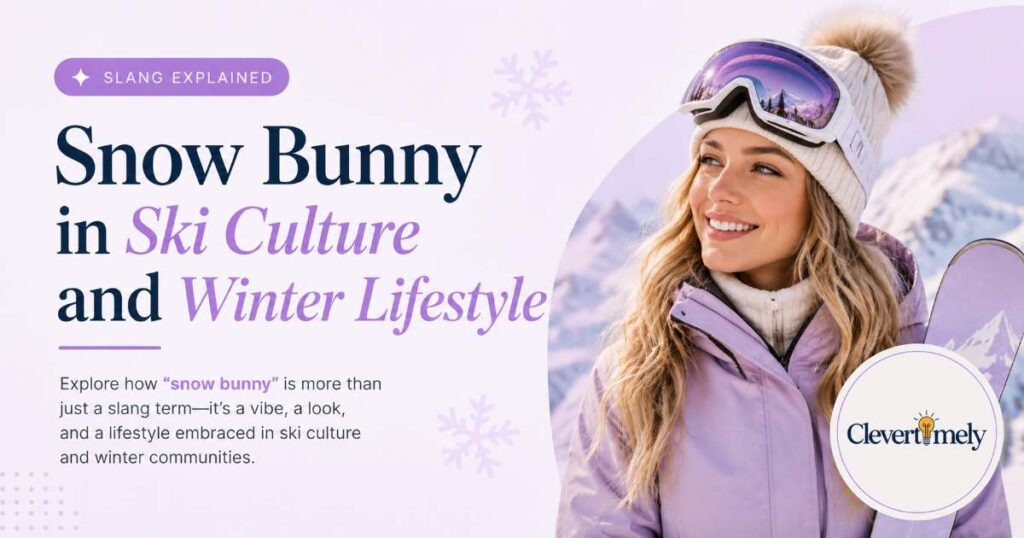
The original meaning of snow bunny still holds up in certain communities, and it is worth understanding it fully before moving on to the more controversial layer.
Positive Ski Culture Meaning
In ski culture, calling someone a snow bunny is usually a compliment or at least a lighthearted observation. It describes someone who:
- Loves being in snowy, mountain environments
- Frequents ski resorts like Aspen, Vail, Park City, or Stowe
- Enjoys the après-ski social scene as much as the slopes themselves
- Is associated with cozy, fashionable winter aesthetics
- May be a beginner or casual skier rather than a serious athlete
The term in this context paints a picture of enjoyment, leisure, and winter lifestyle. It is not aggressive or loaded. Many people self-identify as snow bunnies in this sense without any awareness of the term’s second meaning.
Winter Fashion Connection
One major reason the ski culture meaning has stayed alive is fashion. The aesthetic associated with being a snow bunny, including fur-trimmed boots, oversized puffer jackets, knit headbands, and chic resort wear, has had a strong moment in popular fashion. On Pinterest boards, Instagram posts, and fashion blogs, the “snow bunny aesthetic” is actively searched and celebrated.
This fashion-forward dimension of the term exists completely separately from its racial slang meaning, which is why people can use it genuinely in style contexts without realising it carries another layer for others.
Snow Bunny Meaning in Dating Slang and Social Media
The dating slang meaning of snow bunny is where things become significantly more complex.
Social Media Usage
On TikTok, the term shows up across a range of content types. You will find it in:
- Storytime videos about interracial dating experiences
- Comedy skits that exaggerate stereotypes for laughs
- Reaction videos where creators discuss the term itself
- Meme captions referencing dating preferences
- Aesthetic content where the term is used for its winter lifestyle vibe
The range of uses shows just how fluid the term has become. In 2026, many Gen Z users are aware of both meanings. They often use the term with deliberate irony or self-awareness, signalling that they understand the cultural weight behind it.
Why It Became Controversial
The controversy around snow bunny is not just about the definition. It is about what the term implies when used in dating contexts. Describing someone as a “snow bunny” in a racial or romantic context can:
- Reduce a person’s identity to their race
- Imply objectification rather than genuine attraction
- Feed into stereotypes about interracial relationships
- Create discomfort for the person being labelled
A major real-world example came in November 2025 when Target reportedly sold “100% Snow Bunny” sweatshirts. TikTok users quickly posted videos showing the products, and the backlash was swift once the racial slang meaning was understood by a wider audience. The items were reportedly pulled from shelves. This incident showed clearly how different audiences can experience the same phrase in completely different ways.
Is Snow Bunny Offensive or Harmless?
This is the question most people are actually asking when they search for snow bunny meaning slang. The honest answer is: it depends.
When It Is Harmless
Snow bunny is generally harmless in these situations:
- You are talking about ski resorts, winter fashion, or seasonal lifestyle
- The people involved are close friends who understand the context
- It is used in self-identification, as in “I am definitely a snow bunny in winter”
- The conversation has nothing to do with race, attraction, or dating
In these cases, the term functions like any other playful seasonal descriptor. Nobody is being reduced to a stereotype.
When It Can Be Problematic
Snow bunny becomes problematic in these situations:
- It is used to label someone based on their race in a dating or romantic context
- It is said to objectify or reduce a person to a racial category
- It is used without understanding its cultural layers in a public or professional setting
- It appears on branded merchandise or public content that reaches audiences with different cultural backgrounds
The Target incident is a perfect example of problematic use. A retailer almost certainly used the ski culture meaning but failed to account for the fact that a significant portion of its customer base would read the racial slang meaning instead.
Snow Bunny Meaning in the USA Cultural Context
The United States is where both meanings of snow bunny were born, and American culture is where the ongoing tension between those meanings is most visible.
Regional Influence
The original ski resort meaning is strongest in regions where winter sports are a big part of life. States like:
- Colorado (Vail, Aspen, Breckenridge)
- Vermont (Stowe, Killington)
- Utah (Park City, Snowbird)
- California (Lake Tahoe, Mammoth)
In these regions, “snow bunny” is still primarily a ski culture term for many locals. Coastal and urban communities, particularly those more exposed to hip-hop culture and AAVE, are far more likely to associate the term with its racial slang meaning.
Cultural Layering in the USA
American slang is one of the most layered communication systems in the world because it absorbs vocabulary from so many subcultures at once. Snow bunny is a textbook example of a word that exists in two cultural lanes simultaneously. Understanding which lane is active in any given conversation requires reading the room with care, which is a skill that takes cultural awareness to develop.
Cross-Cultural and Related Slang Meanings
Related Global Interpretations
Outside of the United States, “snow bunny” is mostly understood in its ski culture sense, particularly in Europe and Canada where skiing is deeply embedded in leisure culture. The racial slang meaning is primarily an American phenomenon rooted in AAVE and US hip-hop culture. However, as American music and social media reach global audiences, the second meaning has begun appearing in international conversations as well, which adds another layer of potential misunderstanding in cross-cultural communication.
Emotional and Psychological Associations of Snow Bunny
Words carry feelings, not just definitions. Understanding the emotional weight of “snow bunny” matters as much as its dictionary meaning.
Positive Associations
- Playfulness and seasonal fun
- Attractiveness and fashionable style
- Cozy winter aesthetics and luxury resort vibes
- Light-hearted identity for people who genuinely love snow
- Ironic self-deprecating humour in some Gen Z communities
Negative or Sensitive Associations
- Racial labelling that can feel reductive or objectifying
- Fetishisation concerns in interracial dating contexts
- Feeling tokenised rather than seen as an individual
- Being misunderstood in a public setting due to the term’s dual meanings
For anyone on the receiving end of the term in its racial slang sense, the experience can range from neutral to deeply uncomfortable depending on the intent and tone behind it.
Snow Bunny in Tattoos, Fashion, and Pop Culture
Fashion and Aesthetic Use
The snow bunny aesthetic is a genuine and growing subculture in fashion, particularly among younger women who embrace winter-core style. Key elements of this aesthetic include:
- Neutral-toned puffer jackets and shearling coats
- Fur-trimmed boots and knit accessories
- Soft, glam makeup looks suited to cold weather
- Apres-ski outfits combining warmth with elegance
- Winter whites and icy blue colour palettes
On TikTok and Instagram, the hashtag snow bunny in its fashion sense pulls up thousands of posts that have nothing to do with dating slang. Creators use it to showcase winter outfits, mountain getaways, and seasonal aesthetics.
In tattoo culture, “snow bunny” themed designs have appeared on TikTok as a niche but growing trend, often combining bunny imagery with winter elements like snowflakes or icy backgrounds. Some people use the tattoo as a personal identity marker, while others choose it purely for the aesthetic.
Pop Culture Influence
Hip-hop has been the biggest driver of the term’s second meaning in mainstream pop culture. Multiple high-profile artists have used “snow bunny” in their lyrics, which introduced it to millions of listeners who may not have encountered it in casual conversation. Once it entered rap vocabulary, it became part of the broader cultural lexicon in the US.
Celebrity gossip culture also amplified the term. When public figures in interracial relationships became talking points, the phrase “snow bunny” often appeared in fan discussions and comment sections, further cementing its association with dating and race.
Misuse, Misunderstandings, and Stereotypes
Common Misunderstandings
The most common misunderstanding around snow bunny is assuming it only means one thing. People who grew up in ski culture are genuinely surprised to learn the term carries racial connotations. People who know it primarily from hip-hop often do not realise it has an entirely separate history in winter sports.
Other common misunderstandings include:
- Thinking it is always a compliment (it is not always received that way)
- Assuming it is only used for women (while rare, it can be applied more broadly)
- Believing it is new slang (it dates back to at least the 1940s in one form)
- Treating its ski culture meaning as a cover for the racial meaning in public contexts
Why Misuse Happens
Misuse happens most often when someone learns one meaning without knowing the other exists. A person raised in a mountain skiing community might use the term casually in a context that reads very differently to an urban audience. The reverse is also true. Someone steeped in hip-hop culture might use the term in a setting where others only understand the ski resort meaning and walk away confused.
Social media has compressed these two communities into the same space, which means the chance of a misread moment is higher than ever before.
Shifts in Meaning Over Time (2025 to 2026)
Recent Changes
The most notable recent development came in late 2025 with the Target sweatshirt controversy. It pushed the term into mainstream news coverage and exposed millions of people to the fact that snow bunny has dual meanings. That awareness has shifted how people engage with the phrase.
In 2026, usage patterns on social media show:
- More ironic and self-aware use, particularly among Gen Z
- More commentary videos explaining the term rather than using it casually
- A decline in uninformed usage as more people know about both meanings
- Increased platform-specific behaviour, where the aesthetic meaning dominates Instagram while the racial slang meaning is more present on TikTok
Future Direction
Slang is never static. Based on current trends, snow bunny is likely to:
- Remain searchable and culturally referenced for several more years
- Become increasingly used in ironic or meta-commentary ways
- See its ski culture meaning reclaimed by fashion and aesthetic communities
- Gradually be replaced by newer coded language as Gen Alpha develops its own vocabulary
The term is also becoming a starting point for broader conversations about how racial language evolves, how mainstream brands misread subculture slang, and how context shapes meaning in digital communication.
Meaning Comparison Table
| Context | Meaning | Tone | Who Uses It |
| Ski resort / winter sports | Attractive woman who loves skiing or snow activities | Playful, affectionate | Ski communities, lifestyle content creators |
| Hip-hop / AAVE / dating slang | White woman, often in interracial dating context | Variable, can be neutral or loaded | Hip-hop communities, urban slang users |
| Fashion / aesthetic social media | Winter-core style person with glam snow look | Positive, trend-focused | Gen Z fashion creators, lifestyle influencers |
| Self-identification | Person proudly identifying with snow or winter lifestyle | Light-hearted, fun | Casual social media users |
| Controversy / public misuse | Racially coded term applied in wrong setting | Sensitive, problematic | Uninformed brands, people unaware of dual meaning |
FAQs
What does snow bunny mean in slang?
Snow bunny in slang has two meanings: a stylish woman who loves ski resorts and winter activities, or, in hip-hop and AAVE, a white woman discussed in the context of dating or racial attraction. Context tells you which meaning is active.
Is snow bunny a rude or offensive term?
It can be, depending on how it is used. In ski or fashion contexts it is generally harmless. When used to reduce someone to a racial identity in dating discussions, it can feel objectifying and offensive to the person being labelled.
Where did the term snow bunny come from?
The ski culture meaning dates back to the 1940s in the United States. The racial dating slang meaning developed later through hip-hop and street culture in the 1990s and early 2000s, spreading through music, Urban Dictionary, and social media.
Does snow bunny mean something different on social media?
Yes. On Instagram it often refers to winter fashion aesthetics. On TikTok it appears in both contexts, with a mix of storytime dating videos, comedy content, and fashion posts. The meaning shifts by platform, creator, and audience.
Is snow bunny only used in the USA?
Primarily, yes. The ski culture meaning is found globally wherever skiing is popular, but the racial dating slang meaning is rooted in American AAVE and hip-hop culture. As American music reaches international audiences, the term’s second meaning has started appearing in other countries too.
Conclusion
Snow bunny is one of those slang terms that looks simple on the surface but unpacks into a genuinely complex piece of American cultural history. It started on ski slopes in the 1940s, picked up a second life in hip-hop culture, became a fashion aesthetic on social media, triggered a major retail controversy in 2025, and arrived in 2026 with more awareness and nuance attached to it than ever before.
Whether you encounter it in a TikTok comment, a rap lyric, a fashion hashtag, or a casual conversation, the key is always the same: read the context before you respond. Understanding both meanings, their origins, and the situations where each applies will keep you from misreading a moment and help you communicate with genuine cultural awareness.
Language reflects culture. Snow bunny reflects American culture in all its layered, evolving, sometimes contradictory complexity. That is what makes it worth understanding fully.

