

Introduction
Every few months, a new slang term takes over group chats, comment sections, and DMs. Some are obvious. Others leave you staring at your screen, unsure whether to laugh, reply, or just move on. TSS is one of those terms.
If someone just sent you “TSS” and you have no idea what it means, you are not alone. Millions of people search this exact phrase every month because the abbreviation pops up across Instagram, Snapchat, WhatsApp, TikTok, and just about every other messaging platform. The confusing part? TSS does not have one fixed meaning. Its message changes depending on who is sending it, what was said before, and which platform the conversation is happening on.
This guide breaks it all down in plain language. You will learn what TSS stands for, how it gets used in real conversations, when it can go wrong, and exactly how to reply when you see it. No guesswork. Just clear, useful answers.
What Does “TSS” Mean in Text?
At its core, TSS is a text abbreviation that carries emotional weight in a very short package. The most widely recognized meaning in casual texting is “That’s So Sad.” People use it to react to disappointing news, unfortunate events, or stories that hit them in the feels.
However, TSS is not a one-meaning-fits-all kind of slang. Depending on the tone of the conversation and the relationship between the people chatting, it can also mean “That’s So Sweet,” “Tough Situation, Sorry,” or even a playful sound of mild disapproval similar to the classic “tsk tsk.”
The short answer most people are looking for:
TSS = That’s So Sad (most common in texting)
But the full picture is a lot more interesting than that single definition suggests.
The Most Common Meanings of “TSS”
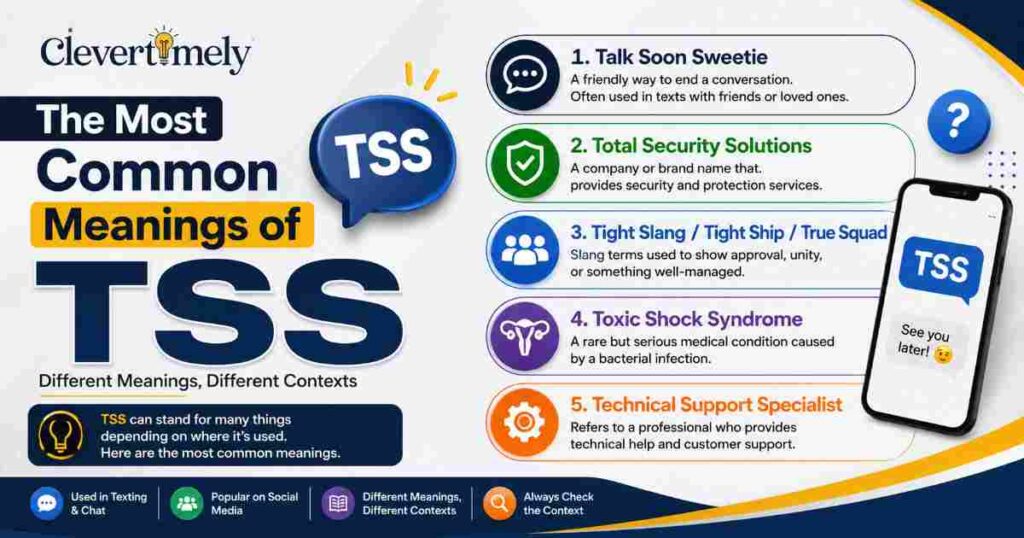
1. That’s So Sad
This is the meaning you will encounter most often in everyday texting. When someone shares bad news, a frustrating experience, or an emotional story, the reply “TSS” is a quick, sympathetic reaction. It is the digital equivalent of saying “aw, that sucks” without typing a full sentence.
Example:
- Friend: “My flight got cancelled and I missed the wedding.”
- You: “TSS, that’s honestly heartbreaking.”
The phrase works especially well on platforms like TikTok and Instagram, where comment sections move fast and people want to express empathy without writing a paragraph. It is warm, quick, and gets the point across.
Read More: WTW Meaning: What It Really Means in Texts, Social Media & Online Chats For 2026
2. Tough Situation, Sorry
This is a less common but still valid reading of TSS, particularly in conversations where someone is walking through a difficult personal situation. Instead of just reacting to sadness, this version carries a slightly more active sense of acknowledgment. It signals: “I see what you are going through, and I am sorry.”
Example:
- Friend: “I got rejected from the job I really wanted.”
- Reply: “TSS, you put so much work into that application.”
In this context, TSS adds a layer of empathy that goes slightly beyond just reacting to sadness.
3. That’s So Foolish
In certain online communities and friend groups, TSS can shift to mean “That’s So Foolish,” usually said in a teasing or joking way. This version is more playful and often comes with a laughing emoji or an eye-roll to signal the lighthearted intent.
Example:
- Friend: “I just bought three pairs of the same sneakers.”
- Reply: “TSS bro, what are you doing 😂”
Without context or an emoji, this meaning can easily be misread as critical, so most people pair it with something that softens the tone.
4. Medical Meaning (Rare in Texting)
TSS also stands for Toxic Shock Syndrome in medical and clinical contexts. This is a serious bacterial infection associated with certain hygiene products. You will not normally see it used with this meaning in everyday texting, but if someone mentions it in a health-related conversation, that clinical definition may apply.
In general chat, social media, or messaging apps, the medical meaning almost never applies. But it is worth knowing so you are not confused if it comes up in a different kind of conversation.
| Meaning | Context | Tone |
| That’s So Sad | Emotional, empathetic chats | Sympathetic |
| Tough Situation, Sorry | Support conversations | Caring |
| That’s So Foolish | Joking, teasing | Playful |
| Toxic Shock Syndrome | Medical or health discussions | Clinical |
How “TSS” Is Used in Real Conversations
Friends & Casual Texting
This is where TSS thrives. Between close friends, it is a shorthand that carries a lot of emotional meaning without requiring much effort to type. It fits perfectly when a friend vents about a bad day, shares an embarrassing moment, or drops some unfortunate news.
Real example:
- “I spilled coffee on my laptop right before a presentation. TSS, I wanted to cry.”
- “TSS, that’s literally my nightmare.”
The exchange feels natural, fast, and emotionally in tune. That is exactly what good slang does.
Instagram & Snapchat
On Instagram, TSS appears most often in comments under emotional videos, sad reels, or heartfelt posts. People drop it as a quick reaction when they want to show they felt something but do not want to write a long comment.
On Snapchat, the tone can shift slightly. Because Snapchat conversations tend to be more personal, TSS often comes with follow-up messages or emojis that clarify the mood.
Instagram comment example:
- “TSS, this video made my whole week better and sadder at the same time 😭”
Dating Apps
On dating apps like Hinge or Bumble, TSS shows up when someone shares a relatable or mildly unfortunate story. It is a low-pressure way to show empathy and keep the conversation going.
Example:
- “I got stood up on Valentine’s Day last year lol.”
- “TSS, that person really missed out.”
Here, TSS softens the moment and shows interest without making things awkward.
Gaming & Online Communities
Gamers use TSS when reacting to bad luck, a frustrating loss, or an embarrassing in-game moment. On Discord, Reddit gaming threads, or Twitch chats, it appears alongside the teasing or sympathetic versions of the term.
Discord example:
- “I just got eliminated in the final circle with full health.”
- “TSS man, the game really said no today.”
Work or Professional Chat
TSS almost never belongs in professional settings. A small exception might be very informal internal chats between colleagues who already have a relaxed dynamic. Even then, using full sentences is a safer choice.
In professional messages, emails, or Slack threads with management or clients, skip TSS entirely. It can read as dismissive or unprofessional to anyone unfamiliar with internet slang.
Is “TSS” Rude, Flirty, or Offensive?
Tone Analysis
TSS is not inherently rude. By default, it lands somewhere between neutral and sympathetic. The problem comes when the reader does not know which meaning was intended, or when the slang feels too casual for the weight of the topic being discussed.
When It Feels Positive
TSS feels warm and genuine when:
- The person receiving it knows the sender well
- There is a sad or disappointing situation being discussed
- An emoji or follow-up sentence is added to clarify tone
- The reply comes quickly and matches the emotional energy of the conversation
When It Feels Negative
TSS can feel dismissive or even cold when:
- Someone is going through something genuinely serious and a two-word reply is all they get
- The sarcastic “That’s So Foolish” version is mistaken for sympathy
- It is dropped without any follow-up, making the sender seem uninterested
Flirty Use
TSS is not typically flirty, but it can take on a slightly playful tone in the right context. For example, if someone is teasing their crush about something silly and responds with “TSS, you’re unbelievable,” the tone depends entirely on what came before it. It is not flirty by nature but can be used in a teasing, light way between two people with that kind of relationship.
How to Respond When Someone Says “TSS”
Knowing how to reply depends on what the person meant by it. Here are examples across different scenarios.
Casual Replies
- “I know right, it’s been such a rough week.”
- “Ugh, TSS for real. What even happened?”
- “Right? I couldn’t believe it either.”
Funny Replies
- “TSS back at you because I can’t believe this is my life either.”
- “Thank you, I accept your condolences 😂”
- “First TSS of the day and it is only 8am.”
Neutral Replies
- “Thanks for understanding.”
- “Yeah, it’s been a lot.”
- “Appreciate it, things will get better.”
Professional Replies
If you receive TSS in a semi-professional setting and want to redirect to clearer communication, you can simply respond normally without using slang back.
- “Thanks, I appreciate the understanding. Here’s where things stand…”
- “Yes, it has been challenging. Moving forward, I plan to…”
Common Misunderstandings About “TSS”
1. Thinking It Always Means Something Serious
TSS is often light and casual. Just because it appears in an emotional exchange does not mean the sender is deeply concerned. Sometimes it is just the fastest way to acknowledge something.
2. Confusing It With Medical Terms
Seeing TSS and immediately thinking of Toxic Shock Syndrome is a natural reflex for anyone with a medical background. In everyday texting, however, that meaning almost never applies. Context makes it very clear which definition is in play.
3. Assuming It’s Rude
First-time readers sometimes read TSS as dismissive or snarky. Unless the conversation tone suggests sarcasm, it is usually a genuinely sympathetic response. The teasing version, “That’s So Foolish,” is the only one that could feel slightly negative, and it is typically paired with humor.
4. Misreading Tone
Text lacks facial expressions and voice inflection. The same three letters can feel warm in one message and flat in another. Always read the surrounding conversation before deciding what TSS is meant to communicate.
Similar Slang Terms You Should Know
If you are getting comfortable with TSS, it also helps to know the related terms you will see in similar contexts.
| Slang | Meaning | Tone |
| SMH | Shaking My Head | Disbelief or disappointment |
| IKR | I Know Right | Agreement, relatability |
| NGL | Not Gonna Lie | Honest or candid feeling |
| FR | For Real | Emphasis or agreement |
| TBH | To Be Honest | Candid, sometimes blunt |
| RIP | Rest in Peace (ironic) | Used humorously for small losses |
| OOF | Sound of impact | React to embarrassing or painful news |
| ISTG | I Swear to God | Emphasis, frustration, or disbelief |
| FSE | Funniest S*** Ever | Shared amusement |
| LMK | Let Me Know | Casual follow-up request |
These terms often appear in the same conversations where TSS shows up. Knowing all of them makes it much easier to keep up with fast-moving chats.
When You Should Avoid Using “TSS”
Professional Settings
Any time you are texting, emailing, or messaging in a work context, TSS is a poor choice. Managers, clients, colleagues you do not know well, and anyone in a formal role will either not recognize it or will find it too casual. Write full sentences when professionalism matters.
Cross-Cultural Chats
Internet slang does not cross cultural lines smoothly. Someone chatting from a different country or with a different first language may have no context for TSS. What feels like empathy to you may read as gibberish or something negative to them. Use clear, full expressions when talking to people from different linguistic backgrounds.
Sensitive Situations
If a friend is going through something genuinely painful, like a loss, a breakup, a serious illness, or a major life setback, TSS is too thin a response. These moments need full sentences, real words, and genuine emotional presence. Slang can feel like a brushoff when someone needs actual support.
When You Need to Show Real Support
There is a difference between reacting to something and actually supporting someone. TSS handles the former. When someone needs the latter, put the phone abbreviations away and write something that genuinely shows you care.
FAQs
What does TSS mean in texting?
TSS most commonly means “That’s So Sad” in texting. It is used as a quick, sympathetic reaction to disappointing or emotional news shared in a conversation.
Is TSS a bad word?
No, TSS is not a bad word. It is a neutral to positive abbreviation in most contexts, used to show empathy or acknowledgment. The teasing version can feel slightly negative but is rarely offensive.
Can TSS be sarcastic?
Yes, it can. When used in the “That’s So Foolish” sense, TSS takes on a dry, teasing tone. The sarcastic reading is usually made clear by the surrounding message or an emoji.
Is TSS used by Gen Z?
Yes. Gen Z users are among the most common users of TSS, particularly on platforms like TikTok, Instagram, and Snapchat where short emotional reactions are part of everyday communication culture.
What’s the difference between TSS and SMH?
TSS expresses sympathy or sadness, while SMH (Shaking My Head) signals disbelief, disappointment, or mild judgment. They can appear in similar situations but point in different emotional directions.
Should I use TSS in professional messages?
No. TSS is casual slang and belongs in personal conversations. In professional settings, using full, clear sentences is always the better choice.
Does TSS always mean “That’s So Sad”?
Not always. While “That’s So Sad” is the most common interpretation, TSS can also mean “Tough Situation, Sorry” or “That’s So Foolish” depending on the context and tone of the conversation.
Conclusion
TSS is one of those small texting abbreviations that carries more meaning than its three letters suggest. In most conversations, it lands as a warm, quick way to say “That’s So Sad” without writing a full sentence. In others, it shifts to empathy, playful teasing, or even rare clinical terminology depending entirely on context.
The key takeaway is this: always read the conversation around TSS before deciding what it means. Emojis, tone, and what was said before it will almost always point you in the right direction. Use it in casual chats with people you know well, pair it with something extra when the situation is emotional, and skip it entirely when the conversation calls for real depth or professional communication.
Now that you know exactly what TSS means and how it works in real situations, you will never have to wonder again.

